The Problem
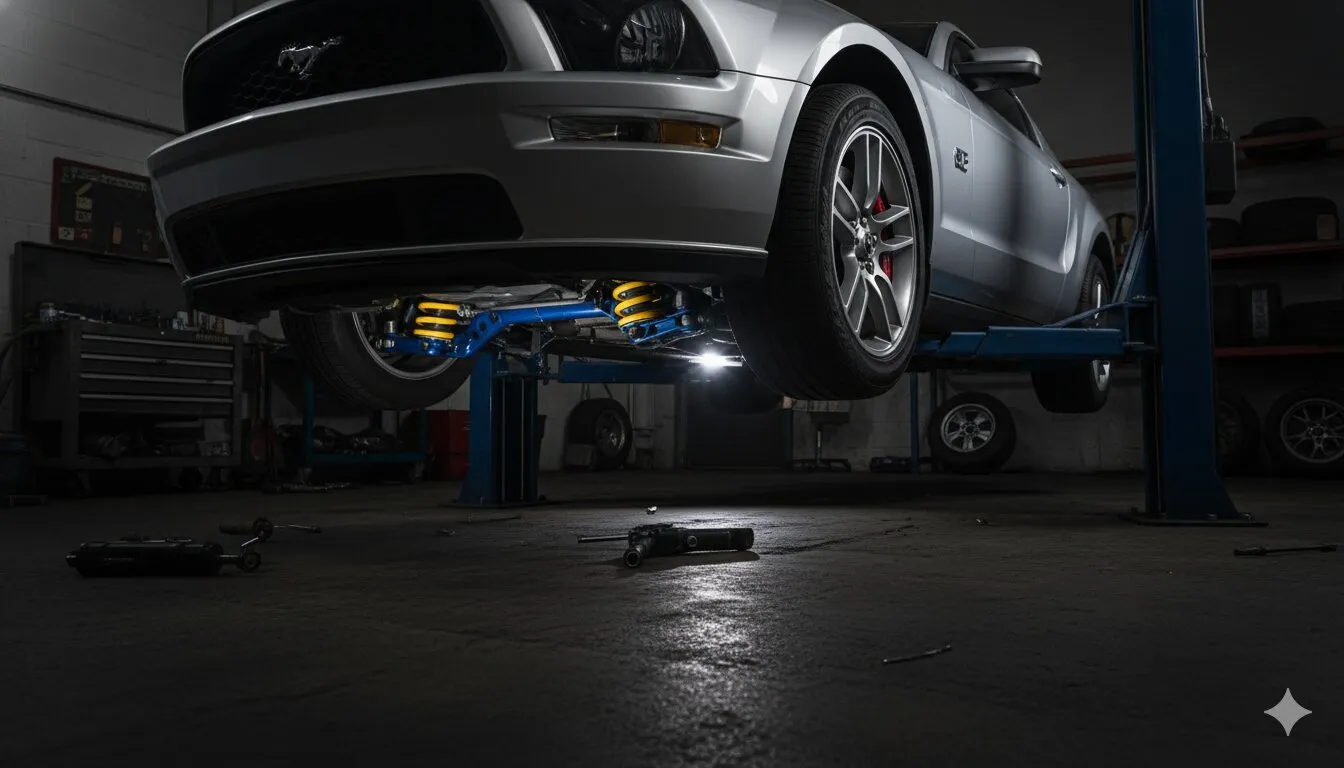
This 2008 Mustang GT came in with classic S197 complaints:
- Vague steering feel
- Excessive body roll in corners
- Rear end “walking” over bumps
- 85,000 miles on original suspension components
The owner wanted a proper handling car for spirited canyon driving, not a drag strip queen.
Inspection Results
We put the car on the lift and found what we expected:
Front Suspension
- Control arm bushings cracked and deteriorated
- Ball joints had play (not dangerous yet, but not great)
- Struts blown - no resistance on compression
Rear Suspension
- Lower control arm bushings completely shot
- Panhard bar bushing worn out (causing the “walking” sensation)
- Shocks similarly blown
Chassis
- Factory spot welds holding, but chassis flex noticeable
- No subframe connectors from factory (convertible has them, coupe doesn’t)
The Build Plan
Rather than just replace worn parts with OEM equivalents, we spec’d upgrades that address the S197’s known weaknesses:
Front End
- BMR tubular control arms: Stronger than stock, adjustable caster
- Koni STR.T coilovers: Height adjustable, valved for street performance
- Steeda bumpsteer kit: Corrects geometry when lowered
Rear End
- BMR adjustable lower control arms: Allows pinion angle adjustment
- BMR adjustable panhard bar: Properly centers rear axle
- Koni STR.T rear shocks: Matched to front
Chassis Reinforcement
- Maximum Motorsports subframe connectors: Ties front and rear subframes together
- Welded in, not bolt-on (much stiffer)
Installation Highlights
Subframe Connectors
This is where the real improvement comes from. The S197 coupe chassis flexes significantly under load. The MM subframe connectors:
- Required welding along the entire length (8 feet total)
- Car was on rotisserie for access
- Seam-sealed and undercoated after welding
- Immediately noticeable difference in chassis rigidity
Coilover Installation
The Koni STR.T coilovers went in smoothly:
- Set initial height to 1.25” drop (front and rear)
- Left damping at factory recommended settings
- Torqued all fasteners to spec with car on ground
Rear Suspension
The adjustable control arms and panhard bar allowed us to:
- Set pinion angle to 2 degrees down (optimal for street)
- Center the rear axle perfectly in the wheel wells
- Preload the bushings at ride height
Alignment
With the new components installed, we did a full corner balance and alignment:
| Spec | Front | Rear |
|---|---|---|
| Camber | -1.2° | -1.0° |
| Caster | +5.5° | N/A |
| Toe | 0” | 1/16” in |
This setup provides excellent turn-in response while maintaining good tire wear for daily driving.
Results
Before and After
The transformation is dramatic:
Steering: Direct and communicative. The vague-on-center feeling is gone.
Body Roll: Reduced significantly without harshness. The car stays flat through corners.
Rear Stability: No more wandering. The rear tracks true over bumps and transitions.
Ride Quality: Firm but not harsh. The Koni valving is perfect for street use.
Owner Feedback
After 2,000 miles, the owner reports:
“It’s a completely different car. I actually look forward to curvy roads now instead of dreading the body roll. Best money I’ve spent on this car.”
Cost Breakdown
| Category | Cost |
|---|---|
| BMR Components | $1,200 |
| Koni Coilovers/Shocks | $950 |
| MM Subframe Connectors | $250 |
| Steeda Alignment Parts | $180 |
| Labor (20 hours) | $1,800 |
| Alignment | $150 |
| Total | $4,530 |
For under $5,000, this car handles better than many cars costing twice as much. That’s the value of addressing the fundamentals rather than chasing horsepower.
Parts Used
- Koni STR.T Coilovers - Koni
- Front Control Arms - BMR Suspension
- Rear Lower Control Arms - BMR Suspension
- Panhard Bar - BMR Suspension
- Subframe Connectors - Maximum Motorsports
- Alignment Kit - Steeda